
The Meat Case Has Two New Problems - And Neither One Is the Price
A tick-borne allergy is quietly reshaping who can eat what — and a tighter government standard is forcing the meat case to finally tell the truth about where your food comes from.

Two stories this week that meet at the same corner: shopper trust and the meat case. In the first, I look at alpha-gal syndrome — a tick-triggered allergy that is spreading faster than almost any other food allergy in America, landing squarely on your deli slicer and service counter before most of your team has ever heard the words “alpha-gal.” In the second, I walk through what USDA’s tightened “Product of USA” standard actually requires of you right now — and why the retailers who treat it as a trust story rather than a compliance headache will come out ahead.
Both stories reward careful reading. So does Friday’s issue preview, below.
Starting today 10% of paid subscriptions will be donated to Feeding America!
The Allergy Hiding in Your Meat Case
Alpha-gal syndrome is growing faster than almost any food allergy in America — and most meat departments and delis aren’t built to handle it
A customer orders a half-pound of turkey at your deli counter. Nothing unusual. Hours later, at home, she’s doubled over with stomach cramps, hives spreading up her arms, struggling to breathe. She didn’t eat turkey that was contaminated with bacteria. She ate turkey that touched a slicer blade that, an hour earlier, sliced ham.
That’s alpha-gal syndrome (AGS) in a nutshell, and it’s the fastest-growing food allergy story the grocery industry isn’t talking about yet.

This Is No Longer a Rural, Niche Problem
AGS starts with a bite from a lone star tick, which transfers a sugar molecule called alpha-gal into the bloodstream. The immune system builds antibodies against it, and the next time that person eats beef, pork, lamb, venison, or dairy — sometimes hours later, not minutes — the body reacts as if it’s been poisoned. The CDC now estimates as many as 450,000 Americans may be living with AGS, and a recent peer-reviewed study tracking over 114 million patient records found mammalian meat allergy diagnoses increased more than 5,500% between the 2015-2020 and 2021-2025 periods, with the steepest rise among adults over 40 — your core grocery shopper.
The geography is shifting too. The lone star tick has historically been concentrated in a belt running from Virginia and the Carolinas down through Oklahoma, but it’s expanding north and west with warming winters. Massachusetts now requires doctors to report AGS cases to the state health department starting this spring, specifically because of a surge in cases on Cape Cod and Martha’s Vineyard. If you operate stores anywhere from New England through the Midwest, this isn’t someone else’s problem anymore — it’s arriving in your trade area, if it hasn’t already.
And unlike a peanut allergy, where a reaction happens in minutes and the cause is obvious, AGS reactions show up three to ten hours after exposure. That delay means most people with AGS spend months — sometimes years — being misdiagnosed with IBS, food poisoning, or “stress.” When they finally get answers, many of them become hyper-vigilant, label-reading, ingredient-researching shoppers for the rest of their lives. That’s a customer relationship retailers either win permanently or lose permanently, based on how trustworthy your store feels to them.
Why the Meat Counter and Deli Are Ground Zero
Here’s what makes AGS different from almost every other allergen conversation we’ve had — and why it lands squarely on the service meat and deli department, not just the ingredient label.
Cooking doesn’t destroy alpha-gal. It’s a carbohydrate, not a protein, and it survives roasting, grilling, smoking, whatever you throw at it. So the danger isn’t “did this product contain a hidden ingredient” — it’s “did this product physically touch another product.”
That puts the deli slicer at the center of the risk. We already know slicers are one of the hardest pieces of equipment in the store to clean, and food safety experts have spent years focused on Listeria for exactly that reason. Now layer alpha-gal on top: a slicer used for ham, salami, or roast beef and then wiped down — not fully broken down and sanitized — before slicing turkey can transfer enough residue to trigger a reaction in someone with AGS. Industry observers have noted that in busy stores, employees often wipe a blade rather than fully sanitizing between meats, which is a problem we’ve tolerated because most customers never noticed. AGS customers notice. Their bodies keep score.
This is the same logic the gluten-free community has been pushing for years — dedicated slicers, color-coded tools, and clearly separated prep zones. Some higher-end delis already run separate slicers for pork products versus poultry versus cheese. AGS gives every retailer a second, urgent reason to make that standard practice rather than a nice-to-have.
The Opportunity Hiding Inside the Risk
I’ve written before about how every consumer pain point is a retailer’s chance to earn trust — and build basket. AGS is a textbook example. Here’s where I’d be focused if I were running merchandising, deli ops, or brand strategy right now:
Separate equipment, real signage. A dedicated slicer (or at minimum, a documented full breakdown-and-sanitize protocol between mammalian and non-mammalian meats) isn’t just a Listeria control anymore — it’s an allergen control. Communicate that at the case. A simple sign explaining your cross-contact protocol does more for trust with this shopper than almost anything else you could spend money on.
Watch what Thrive Market just did. Thrive Market launched an “Alpha-Gal Free” filter on its site in February, built directly from member requests, citing the same hundredfold rise in cases that’s showing up across the research. That’s a low-cost, high-signal move — an e-commerce filter tag — that any retailer with a halfway functional digital platform could replicate this quarter. It tells an entire community of shoppers: we see you, and we built something for you.
Private label has a lane here. Mammalian-free proteins — poultry, fish, plant-based, and the growing GalSafe pork category from genetically modified pigs that don’t carry the alpha-gal sugar at all — are an emerging white space for private brand development. The AGS community is already building its own shopping lists, brand by brand, on forums and Facebook groups. Whoever earns a spot on those lists first keeps it.
Train the people behind the counter. Most deli associates have never heard of alpha-gal. A five-minute training — what it is, why slicer protocol matters, how to answer a customer who asks “is this safe for me” — costs almost nothing and prevents the kind of incident that turns into a viral complaint.
Be careful with cultivated meat claims. As lab-grown beef and chicken expand on shelf, know that recent research raises questions about whether cultivated meat could carry alpha-gal exposure risk too, since it’s grown from animal muscle cells. Don’t position alternative proteins as automatically “alpha-gal safe” without verification — that’s a promise you don’t want to have to walk back.
My Bottom Line
A decade ago, AGS was a medical curiosity. Today it’s a fast-growing population of shoppers who read ingredient panels, ask questions at the counter, and remember which stores got it right. The fifth force reshaping food right now isn’t just weather or pricing — it’s a wave of consumers whose bodies are quietly rewriting the rules of what “safe to eat” means. The retailers and brands who get ahead of alpha-gal — in training, in equipment protocols, in product development — aren’t just avoiding a liability. They’re building loyalty with a customer who has nowhere else to turn.
Have you seen alpha-gal awareness show up in your stores yet — questions at the deli counter, requests for separate slicers, demand for alpha-gal-free products? I’d love to hear what you’re seeing.
🔒 UPGRADE TO PAID — GET FRIDAY’S IN-DEPTH ANALYSIS
Every Tuesday you get my free take on what’s moving in food and grocery. Every Friday, paid subscribers get the deep dive — the data, the strategic implications, the industry intelligence that tells you not just what happened, but what to do about it.
This Friday: The Trump Administration’s decision to delay the FDA Food Traceability Rule by 30 months — and why it is bad for the industry, bad for consumers, and exactly the wrong move at the worst possible time. Hospitalizations from contaminated food doubled in 2024. Boar’s Head. McDonald’s. The romaine outbreaks. The rule existed for a reason. I’ll lay out the case — and the risk calculus every grocery retailer needs to do right now.
Paid plans start at $7/month
“Product of USA” Claims Get Real - Retailers Need To, Too
For years, “Product of USA” was one of those labels that sounded reassuring but didn’t always mean what shoppers thought it meant. Imported meat could be minimally processed or simply repackaged here and still carry a patriotic claim that strongly implied a U.S. lifecycle. That gap between consumer expectation and regulatory reality has finally closed — and grocery retailers now have a narrow window to treat this not just as a compliance exercise, but as a real trust-building opportunity.
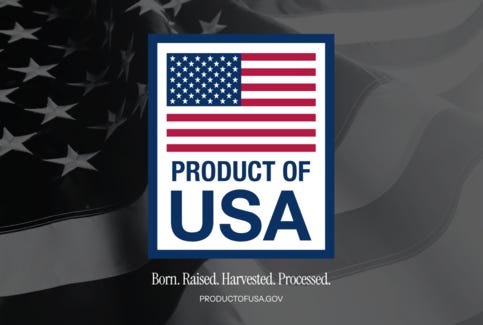
USDA’s new rule tightens the definition of voluntary “Product of USA” and “Made in the USA” claims for meat, poultry, and egg products so that the label actually reflects what consumers assume: that the animals were born, raised, slaughtered, and processed in the United States. The agency’s overview puts it plainly: the “Product of USA” claim is now reserved for products “derived from animals exclusively born, raised, harvested, and processed in the United States,” and for multi-ingredient items, all FSIS-regulated ingredients have to meet that same lifecycle, with other components sourced domestically, too. You can read USDA’s explainer and the original 2024 final rule directly.
Why USDA Moved
This rule is, at its core, a trust repair job. Ranchers, consumer advocates, and some lawmakers have argued for years that letting imported livestock slip under a “Product of USA” label was, at best, confusing and, at worst, deceptive. The National Agricultural Law Center’s summary of the rule does a good job laying out that history and the new standard. USDA’s own language makes the intent clear — to “prohibit misleading U.S. origin labeling” and ensure shoppers get “clear, accurate, and truthful information” about where their food comes from.
That matters because origin and “country of production” cues have outsize influence on shopper trust, especially for proteins. Recent research on consumer confidence in meat and poultry claims shows shoppers pay close attention to origin language, even when they don’t fully understand the regulatory fine print. Once they feel misled, they don’t just lose trust in the brand on the package; they question the retailer that put it on the shelf. In that context, USDA isn’t simply cleaning up a technicality. It’s forcing the supply chain, including grocers, to reconcile what the label says with what shoppers believe.
Voluntary Label, Mandatory Implications
One nuance retail teams will have to explain internally: the “Product of USA” program is voluntary, but the truthfulness standard is not. No one is forced to put “Product of USA” or “Made in the USA” on their labels, but if they do, they must now meet the tightened criteria and maintain evidence that supports the claim. FSIS still treats these as “generic” label claims that don’t require pre‑approval, but plants and brands have to keep substantiation on file — and retailers will feel the impact through their vendor agreements and private label specs.
There’s also a timeline. The final rule was issued in 2024 with a compliance date of January 1, 2026 for establishments that choose to use the claim. USDA has since promoted a standardized “Product of USA” graphic and three basic steps for businesses — confirm eligibility, maintain documentation, and apply the label — in a newer USDA overview. For a more technical breakdown of what qualifies, how to document it, and what to do with “mixed” products, a Perkins Coie legal summary is a strong resource, and FoodChainID’s implementation guidance gives food businesses a practical checklist for what “good” documentation looks like.
What Changes at the Shelf
Most of the heavy regulatory lifting happens upstream, but the visible churn will be in your meat case, egg cooler, and on your product detail pages. Expect three immediate changes:
Fewer labels will qualify for “Product of USA” under the new definition. Items that once leaned on imported livestock or mixed-origin inputs and still wore a U.S. flag will either have to reformulate or re‑label.
More precise origin claims will appear, such as “Prepared in the USA from imported beef” or “Processed in the USA with domestic and imported ingredients,” reflecting FSIS guidance that origin claims must clearly describe which steps occurred here.
Private label refresh cycles will accelerate. Anything with “Product of USA,” “Made in the USA,” or flag-heavy graphics will need to be vetted against the new standard before you approve another print run.
Retailers should also remember that origin information lives beyond the pack. Ecommerce titles, bullets, filters, and imagery often echo or even amplify origin language. If the box drops “Product of USA” but the PDP copy and search filters don’t, you’ve just moved your risk online instead of eliminating it.
What Retailers Need to Do
So what does “getting real” about “Product of USA” look like inside a grocery organization? At a minimum:
Audit your assortment. Identify every SKU making a U.S.-origin claim on pack, on shelf tags, or online. Separate what is clearly under FSIS jurisdiction (meat, poultry, eggs) from everything else, but don’t assume shoppers will make that distinction.
Tighten your vendor standards. Require suppliers using “Product of USA” or “Made in the USA” to provide documentation that animals were born, raised, harvested, and processed domestically, along with clear records for multi-ingredient products. This is where the FoodChainID guidance is useful as a checklist for what “good” documentation looks like.
Rebuild your label and content workflows. Make U.S.-origin language a checkpoint in your private label packaging approvals and your digital content process. Marketing doesn’t get to invent new “patriotic” phrasing that implies full U.S. origin while technically avoiding the regulated phrases.
Clarify “partial” U.S. claims. Where you can’t meet the full standard, but still want to emphasize domestic steps, use transparent phrasing: “Processed in the USA from imported pork,” “Seasoned and packed in the USA with imported beef,” and so on. The FSIS overview video series for industry (for example, “Overview: Voluntary ‘Product of USA’ Labeling Claims” on USDA’s YouTube channel) gives useful examples retailers can adopt.
My Bottom Line
The real opportunity here is to treat the rule as a narrative, not just a nuisance. A few ways to turn it into a trust‑builder:
Tell shoppers what changed. At the meat case and on your site, a short explainer goes a long way: “USDA has tightened what ‘Product of USA’ means. When you see this claim here, it now means the animals were born, raised, and processed in the United States.” USDA has also launched productofusa.gov as a dedicated consumer-facing resource — link it directly so shoppers can verify the standard for themselves. USDA’s explainer for shoppers who want to dig deeper.
Be transparent when claims disappear. If a longstanding private label item drops its “Product of USA” language, consider a brief FAQ or note: new rules, same product, clearer labeling. That frames the change as honesty, not a downgrade.
Create real wayfinding for truly domestic items. If you carry products that meet the stricter standard, don’t bury them. Use shelf tags, end caps, and digital filters that let shoppers actively seek “Product of USA” items, again with that tighter USDA definition front and center.
Consumers were told for years that “Product of USA” meant one thing, while the regulation allowed something else. USDA has finally pulled those two closer together. Now it’s on grocery retailers to decide whether they will quietly shuffle labels in the background, or lean into this moment to rebuild credibility on one of the most emotional claims in the meat case: where our food really comes from.
📣 BOOK PHIL FOR YOUR FALL 2026 EVENT
For more than three decades, Phil Lempert has helped food industry audiences see what’s coming before it arrives — in consumer behavior, supply chain, retail strategy, and the forces quietly reshaping the grocery store. If your conference, company meeting, or industry event needs a keynote that connects the dots between data, culture, and the shelf, Phil is booking fall 2026 dates now.
Topics include:
• The Five Forces Reshaping Food — and What Retailers Must Do Now
• Consumer Trust in the Age of AI, Misinformation, and Label Confusion
• The GLP-1 Revolution: How Weight-Loss Drugs Are Rewriting the Grocery Store
• FoodNotPhones: Winning Back the Family Mealtime Moment
• The Polycrisis Shopper: Understanding Today’s Stressed, Savvy Consumer
Thanks for reading The Lempert Report!
Awesome report Phil!
Excellent newsletter! I was bitten by lone star tick nymphs (babies) several years ago in Martha's Vineyard. I did not get AGS, which it fairly typical (usually the bite has to be from a full grown tick) but some people have gotten AGS from the nymphs. I went to see my doctor because the bites were many, mighty and disgusting, it was a mystery, until I started doing massive research (my friend who I was with had it too). At the time, no one in NYC that I talked with had even heard of a lone star tick. I had to call specialists in Cape Cod, Nantucket and Martha's Vineyard to get the scoop.