
The Grocery Industry Has Two Problems Right Now. One It Created. One It Didn't.
McDonald's is finally remembering who its customer is. The El Niño bearing down on the global food supply won't wait for the rest of retail to catch up.

In 1968, I stood behind the counter of the McDonald’s in Belleville, New Jersey, in a paper hat, ringing up Big Macs. The Big Mac had just gone national that year at 49 cents. Add an order of fries and a drink, and the whole meal came to 99 cents; you literally got a penny back from your dollar (of course now that couldn’t happen with the elimination of pennies!). That wasn’t just a price point. It was a promise. McDonald’s knew exactly who it was and exactly who it served, and the line out the door proved it.
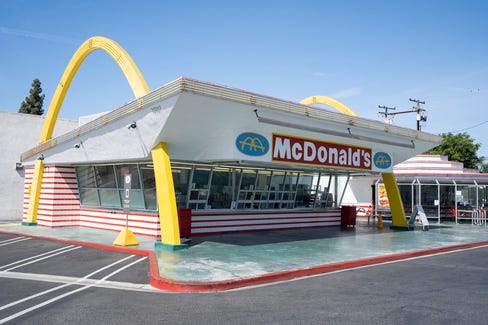
Fast forward to a few weeks ago, when CEO Chris Kempczinski unveiled the company’s new corporate strategy, its first major overhaul since 2020, built around a back-to-basics idea: win back the core customer with value, speed, and restaurants that are, in the words of chief restaurant experience officer Jill McDonald, “easier to run and more enjoyable to visit.” The urgency is real. The share of U.S. customers who say McDonald’s offers good value collapsed from 55% to roughly 40% between 2020 and 2024, according to UBS Evidence Labs surveys; and it has barely budged since.
Here’s what struck me reading the coverage: McDonald’s has had to relearn this lesson over and over for fifty years. And every time the company forgets, its own customers deliver the verdict.
Remember the Arch Deluxe? In 1996, McDonald’s spent a reported $100 million-plus — one of the priciest ad campaigns in fast food history — to sell a “sophisticated” burger with potato bun, peppered bacon, and a mustard-mayo sauce to adults who, the ads suggested, had outgrown the regular menu. It was gone within a few years, and it remains a business school case study in misreading your own customer.
It wasn’t the first stumble, and it wasn’t the last. McPizza arrived in the late ‘80s with real ovens installed in stores and soon died because nobody walks under the Golden Arches craving a pizza that takes eleven minutes to serve. The McLean Deluxe, the 1991 “91% fat-free” burger held together with seaweed extract, flopped so completely it became a punchline. Premium salads and the McSalad Shakers had their moment in the 2000s, but salads quietly disappeared from U.S. menus during the pandemic and never came back: the reason was clear, the data showed almost nobody was ordering them. The Angus Third Pounders, the chef-driven Signature Crafted line, the McPlant burger with Beyond Meat that fizzled out of its U.S. test are all gone. Even CosMc’s, the splashy beverage-forward spinoff designed to chase the Starbucks crowd, was shuttered last year.
The pattern is unmistakable. McDonald’s loyalists have voted with their wallets for five decades, and the ballot always reads the same: fries, a burger, a Coke, fast, and at a price that doesn’t make you wince at the register. They don’t want McDonald’s to be a bistro, a pizzeria, a salad bar, or a plant-based pioneer. They want McDonald’s to be McDonald’s.
So why am I writing about a fast feeder in a supermarket newsletter? Because food retailers are making the exact same mistake right now.
I’ve written here about the polycrisis shopper and the K-shaped economy - the widening split between households trading up and households counting every dollar. Too many supermarket chains are chasing the top of the K: elaborate store-within-a-store concepts, premium private label tiers stacked on premium private label tiers, sushi counters and wine bars and curated olive oil walls, while their core shopper is standing in the center aisles doing the math on a box of pasta. The shopper who built your business is telling you, every week, in your own POS data, what she wants: fair prices on the items she actually buys, a store she can get through quickly, and a checkout experience that doesn’t feel like an interrogation.
That doesn’t mean retailers shouldn’t innovate. McDonald’s greatest hits, from the Filet-O-Fish to the Egg McMuffin to the Happy Meal, were all innovations. But notice what they have in common: each one gave the core customer more of what they already loved. The failures, almost without exception, tried to turn the customer into someone else.
My Bottom Line
Kempczinski’s new strategy is a public admission that the world’s biggest restaurant company drifted from its identity and paid for it in traffic. It took McDonald’s a 15-point collapse in value perception to remember the lesson I learned behind that counter in Belleville: know who you are, know who your customer is, and never make them feel like they need a bigger wallet — or a different palate — to walk through your door.
The retailers who internalize that this year will own the back half of this decade. The ones who don’t will be writing their own Arch Deluxe story.
The Weather Bill Is Coming Due
I’ve spent four decades watching the forces that shape what Americans pay at the checkout lane. Tariffs. Labor costs. Fuel prices. Drought. Supply shocks. And every once in a while, something comes along that has the potential to hit all of those pressure points at once.
That something is called El Niño — and right now, all the signals say it’s coming back. Hard.
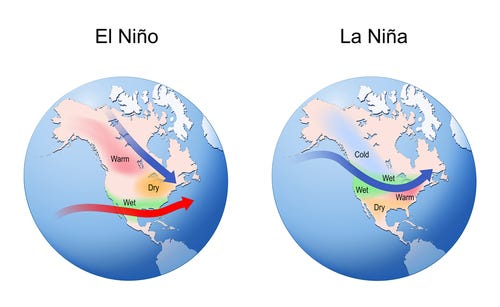
On June 11th, NOAA released its latest ENSO Diagnostic Discussion. Climate forecasters now project a high likelihood that the world is transitioning from neutral Pacific conditions into a full El Niño weather pattern in the second half of 2026, with some models pointing to a “super” event that could persist well into 2027. The World Meteorological Organization put the odds of El Niño developing through June to August at 80%, rising to around 90% through November. ClimateAI, one of the most closely watched agricultural forecasting firms, now puts the odds of El Niño conditions beginning in 2026 at greater than 90%. Their models are converging on a super El Niño that is roughly six times the warming needed to simply qualify as an El Niño event at all.
I want to be clear: this is not a weather story. This is a grocery industry story.
What Is El Niño, and Why Should Retailers Care?
El Niño is part of the broader El Niño-Southern Oscillation (ENSO) cycle, driven by warmer-than-average surface temperatures across the tropical Pacific Ocean. When those temperatures rise, they alter the entire global atmospheric circulation. Some regions flood. Others bake in drought. The effects ripple across continents, growing seasons, and supply chains. They unfold over months, sometimes over a year or more.
The grocery industry has already been navigating what I’ve called the “polycrisis,” which is a convergence of inflation, supply chain disruptions, tariff pressures, and shifting consumer spending habits. A significant El Niño doesn’t arrive as a separate problem. It lands on top of all of it.
Think of it as the butterfly effect applied to your produce aisle. A patch of warm water in the equatorial Pacific alters rainfall in West Africa, which disrupts the cocoa harvest, which raises the price of every chocolate bar and baking chip in your store. It’s not theoretical. It happened in 2023-24, when El Niño wiped out 14% of global cocoa supply. Prices hit record highs. And that was not even a super El Niño.
The Commodities Most at Risk
Here are the specifics. Rice, coffee, cocoa, palm oil, sugar, and seafood are among the most vulnerable globally traded food commodities during El Niño events. These aren’t niche items. They are ingredients embedded throughout the store from the breakfast aisle to the bakery to the seafood case to the beverage cooler.
An analysis published by Reuters put possible price shocks at 10% to 50% across core commodities, with the most exposed crops, rice, palm oil, sugar, and coffee, potentially spiking 50% to 100% or more under a severe scenario. Government responses can amplify the damage further: during past shortages, major rice-exporting nations including India, Vietnam, and Thailand have restricted shipments to protect domestic supply, tightening global availability and sending prices even higher.
And it doesn’t stop with the ingredients. Energy costs, fertilizer prices, transportation expenses, and packaging inputs can all be affected when El Niño disrupts the global system. Food manufacturers already managing tight margins face the prospect of ingredient and input cost pressures hitting simultaneously.
Here at home, the picture is mixed. The Southern Plains states (Texas, Oklahoma, Kansas) could see meaningful moisture relief after years of drought stress. That’s potentially good news for winter wheat production and livestock operators. But more rain isn’t always better. Too much precipitation delays planting, complicates harvest, increases disease pressure, and lowers crop quality. The “Goldilocks zone” is hard to find in the middle of a climate disruption.
Seafood: A Category Often Overlooked
One of the most under appreciated impacts of El Niño hits the seafood aisle, and it starts beneath the surface of the ocean.
Under normal conditions, cold, nutrient-rich water rises from the depths of the eastern Pacific, supporting the marine food chains that sustain some of the world’s most productive fisheries. El Niño weakens or shuts down that upwelling, and the consequences move up the food chain quickly. Fish populations migrate, disperse, or experience lower survival rates. Cold-water species retreat northward. The Peruvian anchoveta fishery, one of the world’s largest sources of fishmeal and fish oil, which in turn affects aquaculture and livestock feed costs, has historically collapsed during major El Niño events. Peru loses up to 5% of its total national income in bad El Niño years from disruptions to fish landings and crop yields alone.
NOAA scientists documented that the strong 2023-24 El Niño altered ocean productivity along the U.S. West Coast, affected salmon populations, contributed to harmful algal blooms, and influenced fishery management decisions. A stronger event this time around could produce more of the same.
A Compounding Crisis
What makes 2026 uniquely challenging is the convergence of pressures already in play. USDA was already projecting grocery price increases across categories including beef and veal, fish and seafood, nonalcoholic beverages, and sugar and sweets, and that’s before El Niño entered the forecast. Bloomberg is now reporting that the combination of tariffs, geopolitical disruptions, and a potential super El Niño is projected to simultaneously lower food supply and raise production costs.
Researchers from Australia’s CSIRO estimated that the 1997-98 El Niño cost the global economy roughly $2.1 trillion in the three years following the event. The 2015-16 event cost the world approximately $3.9 trillion. Our food systems are more interconnected today than they were during either of those events. The numbers in 2026-2027 could be larger still.
What This Means for the Supermarket Industry
For retailers, the most important question isn’t whether El Niño develops into a moderate event or a record-breaker. Every model run between now and August will refine that picture. The question is: are you prepared to manage the consumer fallout from tightening supplies and rising prices across multiple categories at once?
Shoppers who have already stretched their budgets through five years of food inflation are not going to absorb another round of price increases quietly. We’ve already seen the shift toward private label, the trading down in proteins, and the growing reliance on promotions and loyalty programs to maintain basket size. El Niño has the potential to stress those strategies even further.
Category managers need to be thinking now about which commodities in their assortment carry the most exposure to Southeast Asia, West Africa, South America, and the Indo-Pacific. Supply chain teams need to be stress-testing sourcing alternatives. Marketing teams need to be preparing how to communicate value to shoppers who are going to feel this — even if they never hear the phrase “El Niño-Southern Oscillation.”
My Bottom Line
The weather bill is coming due. I’ve been saying for the past year that weather is the fifth force of food inflation — alongside supply chains, labor, energy, and geopolitics — and too few in our industry treat it as a first-class strategic variable. This is the moment that changes.
El Niño doesn’t care about earnings calls or promotional calendars. It operates on its own timeline. But the grocery industry can get ahead of it — if we pay attention now, while there’s still time to plan.
🔒 This Friday — For Paid Subscribers Only
Four Farmers Called It. Retailers Didn’t Listen.
In June 2023, four working farmers sat on a Wall Street Journal stage and told anyone willing to hear them exactly what was coming: the beef herd decimated by drought and never rebuilt, the water crisis nobody wanted to confront, the labor exodus that would leave fields unharvested, the cascading costs that would eventually land on every shelf in every store in America.
They weren’t forecasters. They weren’t economists. They were a Nebraska rancher who watched tire costs go from $1,000 a set to $1,000 a tire. A Connecticut dairyman trying to hold a cooperative together. A fourth-generation Illinois row-crop farmer managing soil her great-grandparents tended. And my friend A.G. Kawamura — California’s former Secretary of Agriculture — who told that room something I’ve never forgotten: “No labor means no food.”
Three years later, everything they predicted has happened. And the grocery industry’s response? Largely silence.
This Friday, I go back to that panel, pull the receipts, and answer the question nobody in retail wants to ask: if the farmers told us, why didn’t we listen — and what do we do differently now that El Niño is rewriting the next chapter?
Paid subscribers get the full column plus The Action List — three specific moves for retailers and buyers navigating what’s coming next.
Not a paid subscriber yet? Now is a very good time to become one.
Bring this conversation to your stage.
Later this month I’ll be keynoting the MIDA Conference in San Juan, Puerto Rico, and I’m now booking keynotes and fireside chats for fall 2026 and beyond. From the polycrisis shopper and the K-shaped economy to dynamic pricing, MAHA, GLP-1s, and the weather bill that’s coming due for the food industry — I bring fifty years of food industry perspective (yes, starting behind that McDonald’s counter in Belleville) to conferences, leadership summits, and board meetings worldwide.
If your organization needs a speaker who connects what’s happening on the farm, in the supply chain, and at the shelf to what your customers will do next, let’s talk:
Thanks for reading The Lempert Report!
I very.much appreciate the information that you provide to consumers, and the way that you link science into it. I can no longer trust the government to look out for trusted information. And I've been following you since SG when you used to review food.
DC, thanks so much! Do you miss the reviews? Trying to figure out if worthwhile to redo those?
Phil