

America’s Protein Obsession
The numbers tell the story. In 2022, 59% of American consumers reported trying to consume more protein. A year later it climbed to 67%, and by 2025, fully 7 in 10 American consumers want more protein in their diets. Cargill’s 2025 Protein Profile found that 61% of Americans increased their protein intake in 2024, up from just 48% in 2019.
The U.S. protein market is valued at $114.4 billion as of 2024 and is projected to grow at an annual rate of 1.9% through 2028. On the supplement side alone, SPINS data shows protein supplement and meal replacement sales grew in double-digit unit (+13%) and dollar (+12.4%) terms year over year, with protein supplement sales generating $8.6 billion in 2025.
For the first time, “good source of protein” tops the list of criteria Americans use to define a healthy food — and for the third straight year, a “high protein diet” is the most common eating pattern Americans are following according to the 2025 IFIC Americans’ Perception of Protein Report.
RFK Jr. and the “Beef Is Back” Moment
The political tailwind for protein — and specifically animal protein — is unlike anything the industry has seen in decades.
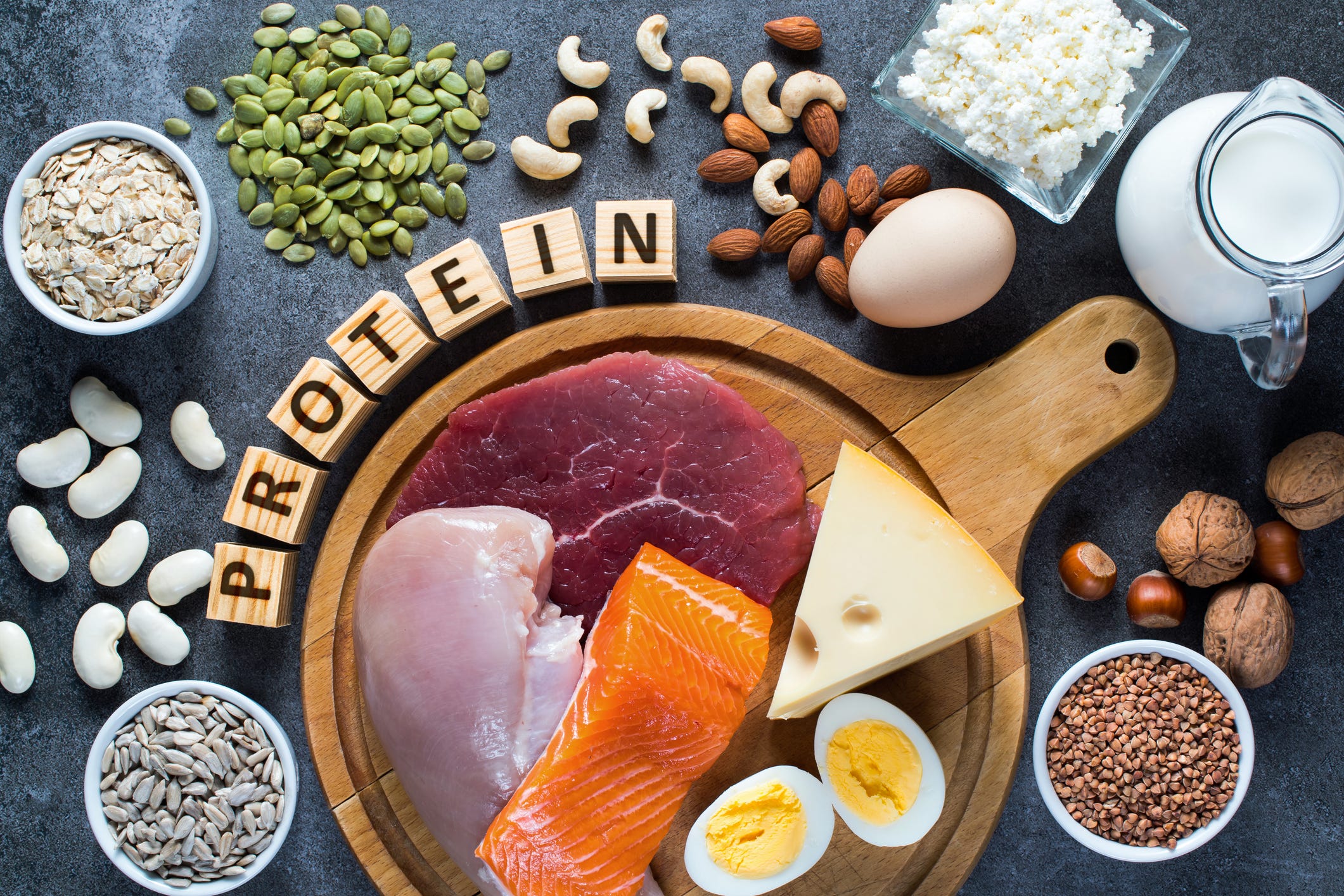
On January 7, 2026, HHS Secretary Kennedy and Agriculture Secretary Rollins released the 2025-2030 Dietary Guidelines, marking the most significant changes including prioritizing protein over carbohydrates, recommending full-fat dairy instead of low-fat options, and cutting out processed foods like white bread, chips and candy.
The new pyramid features red meat and saturated fat sources at the very top, going against decades of research according to Christopher Gardner, a nutrition expert at Stanford University and member of the Dietary Guidelines Advisory Committee.
The updated guidelines nearly double the recommended daily amount for protein intake, increasing it to 1.2-1.6 grams per kilogram of body weight, depending on specific age group and individual caloric needs. For a 165-pound person, that’s 90-120 grams of protein per day — versus the old guidance of about 60 grams.
Then in February, Kennedy appeared at Cattlecon in Nashville and went further, declaring “the war on protein is over” and announcing “beef is back on the menu.”
The expert backlash has been significant. Columbia University professor Marie-Pierre St-Onge told ABC News: “Protein was never demonized in U.S. dietary guidelines. As it is, Americans are consuming protein in amounts well above the amount necessary to sustain health and development.” The American Heart Association and American Medical Association both raised concerns about the saturated fat implications of the red-meat push.
The Iran War: A Continued Threat to Protein Prices
I’ve written about this issue a number of times and this is where the story gets urgent. The conflict that began February 28, 2026, is threatening to send protein prices even higher through multiple vectors. The ten-day cease fire announced on Friday April 17th, that reopened the Strait of Hormuz and resumed shipping gave us a glimmer of hope. Although the US blockade on Iranian ports and the events of this past weekend continues casting doubts. The cease fire is due to expire tomorrow, Wednesday. The question will their be another cease fire? Will the threats from both sides continue to escalate and create bigger issues?
And even if the latest round of talks come to some conclusion (which I doubt) the impact on food prices is already in the supply chain and we can expect prices to continue to rise thru the summer BBQ season and into the fall.
The fertilizer shock: The Middle East plays an outsized role in fertilizer production, and countries exposed to disruptions — including Egypt, Iran, Qatar, Saudi Arabia and the UAE — account for about 49% of global urea exports and roughly 30% of ammonia exports. Ammonia prices in the Middle East are up 92% compared with a year earlier, while urea prices are up 70% over the same period. In the U.S., ammonia prices are currently 41% higher than they were last March. Nitrogen fertilizer is a primary input for corn — the foundational feedstock for U.S. beef, dairy, and poultry — so prices for these products are likely to climb further.
Energy costs compounding the problem: Before the war began, Brent crude hovered around $70 per barrel. By mid-April 2026 it had climbed to approximately $98.11 now the price is $96.34 (as of yesterday morning). The question we all are wondering is where will the price land? The higher crude oil prices are already impacting food packaging costs, and combined with rising transportation and fertilizer costs, multiple pieces of the food supply chain are facing pressure that will push up grocery prices.
A Sampling of Products That Have Added Protein
The reformulation wave has swept across virtually every category. Here’s a few:
Beverages & RTD:
PepsiCo relaunched Muscle Milk with cleaner ingredients in two variants — a 26g Base and 42g Pro drink — and introduced Starbucks Coffee + Protein with 22g of protein and 5g of fiber, as well as Propel Clear Protein targeting the functional hydration and GLP-1 space.
Starbucks is now selling Protein Lattes and Cold Foam Drinks delivering up to 36g of protein per grande drink.
Clear protein RTD shakes drove the highest sales growth in 2025 (up 34%), followed by ultrafiltered protein shakes (up 25%), and protein waters, shots and sodas (up 12%).
Dairy & Yogurt:
Danone introduced a shelf-stable protein shake under Oikos, released Oikos Fusion (formulated for weight management), and launched Silk Protein, a high-protein plant-based milk alternative.
In the U.S., an estimated 40% of yogurt now carries the “high protein” label.
Danone is developing protein shots containing 10g of protein to support muscle health.
Frozen & Ice Cream:
Protein Pints, a high-protein ice cream brand, surpassed 10 units per store per week at Target for its cookie dough variety — more than double the category average — at nearly $2 more than conventional ice cream.
Nestlé has developed a line of high-protein frozen ready meals alongside a proprietary whey microgel to boost protein content in milk drinks.
Cereal & Grains:
General Mills reported strong performance from protein-fortified cereal as a key part of its growth strategy.
Barilla, which first launched its Protein+ pasta in 2005, has expanded distribution into BJ’s and Sam’s Club, with “demand like we haven’t seen before” in the last three years.
Mac & Cheese: check out our new product review below
The Drawbacks: What Protein Overconsumption Actually Does
Kidney strain: People on very high protein diets have a higher risk of kidney stones, and a high protein diet containing lots of red meat and higher amounts of saturated fat might lead to a higher risk of heart disease and colon cancer. Research from PMC shows high-protein diets can cause glomerular hyperfiltration, potentially accelerating the progression of kidney disease — even in people without existing kidney conditions.
The nutrient displacement problem: Most Americans already get plenty of protein but under-consume other important nutrients. Filling up with protein can crowd out fiber, antioxidants, and phytonutrients from fruits, vegetables, and whole grains from one’s diet.
Hidden calories: Excess protein your body can’t use gets converted to fat — a particular irony for consumers pursuing protein for weight management.
Digestive distress: Eating too much protein, especially red meat, can bring on bloating, constipation, and diarrhea. High protein intake also means ingesting excess calories, and your body turns excess protein into fat.
The bottom line from Harvard: Cap total protein at no more than 2g/kg of ideal body weight for the average healthy person, get it from diverse sources, and don’t let the protein label on a product substitute for understanding your actual dietary needs.
Book Phil Lempert for Your Next Event
If your organization needs a keynote speaker who can cut through the noise and deliver real intelligence — not just talking points — I’m available for corporate events, retailer summits, and trade association conferences.
I’ve just completed two new up-to-the-minute keynote presentations, book today there is limited availability on these:
“The 5 Retail Shifts That Will Reshape Profit Margins in 2026”
“What Consumers Will Stop Buying Next - and Why It Matters”
With more than 30 years tracking the supermarket industry, I bring timely, data-driven perspective on the topics reshaping food retail right now: the Iran conflict’s ripple effects on diesel, fertilizer, and food prices; tariff-driven grocery inflation; the MAHA movement’s push to reform what’s on our shelves; and the consumer behavior shifts that will define the next decade of retail strategy. If your audience is a C-suite team, a sales force, or a convention hall, I will connect the macro forces to the decisions that matter most to your business. To inquire about availability and learn more CLICK HERE
The Great Food Tradeoff: What a New National Survey Tells Us About the Shopper You’re Losing
Affordability has pulled even with taste. That’s not a headline — it’s a warning.
There’s a survey making the rounds right now that every grocery retailer and CPG brand executive needs to read and study. This morning, Stratovation Group and Inspire PR Group released the finding in their Consumer Insights Webinar.
Conducted in January 2026 by the Stratovation Group and Inspire PR Group across 823 primary household grocery shoppers, the research delivers a finding that should stop the industry cold: food affordability is now in a statistical dead heat with taste as the most important factor when purchasing food.
That’s a seismic shift. Taste has reigned supreme in consumer research for decades. The fact that it now shares the top rung with price isn’t just an economic signal, it’s a behavioral restructuring that will reshape the grocery landscape for years to come.
The Numbers Don’t Lie
More than half of respondents say food price increases have affected how they buy groceries or dine out. Nearly 40% are eating more meals at home. About one in three are leaning on store brands and bulk items to manage costs. And nearly half (47% ) are actively stretching food into multiple meals.
This is not a recession behavior. This is a permanent recalibration.
The USDA’s own Economic Research Service confirms the pressure: food-at-home prices were 2.4% higher in February 2026 than a year prior, and beef and veal prices were a staggering 14.4% above year-ago levels. The survey’s finding that beef tops the list of foods consumers are cutting first — cited by 35% of respondents — isn’t a surprise when you look at the numbers. Pork (23%), chicken (21%), and turkey (17%) follow. Fresh produce and dairy are also on the chopping block.
Here’s what should concern CPG protein brands specifically: consumers aren’t just trading down, they’re trading out. When beef disappears from the weekly list, it doesn’t automatically become pork or chicken. It may become lentils, beans, or an entirely different meal architecture.
The Store Brand Surge Is Structural, Not Cyclical
The survey’s finding that roughly one in three shoppers are turning to store brands or generic items to manage costs lands squarely on top of a mountain of corroborating data. According to the Private Label Manufacturers Association, store brand sales hit a record $282.8 billion in 2025 — up $9 billion year-over-year — growing at nearly three times the rate of national brands. Store brands now hold 21.3% of dollar share and 23.5% of unit share. Both are all-time highs.
Circana data shows the categories driving private label growth include refrigerated and fresh perimeter products, frozen food, and shelf-stable beverages — exactly the categories where shoppers are most actively managing costs right now.
This is not a pandemic-era blip. This is a generational shift. NielsenIQ’s Global Outlook reports that more than half of global consumers say they are increasingly purchasing private-label products. Gen Z is now the fastest-growing private label adopter, and their dollar share of store brand spending is projected to surpass Baby Boomers by mid-2026.
For national brands, the message is urgent: you are no longer competing on heritage alone.
“Food affordability is now in a dead heat with taste. Retailers and brands that don’t respond to this reality aren’t just losing sales — they’re losing relevance.”
Convenience Hasn’t Been Abandoned — Just Reprioritized
One of the most strategically important findings in this survey is what consumers are NOT giving up, even as they cut costs. About three-quarters of respondents have used their grocery store’s pickup and delivery services. About 7 in 10 use a third-party grocery app. And 8 in 10 order restaurant delivery at least once a month — with DoorDash (64%) and UberEats (47%) holding dominant positions.
People are stretching meals, cutting beef, and switching to generics — but they are still ordering delivery. This is critical: convenience is now a baseline expectation, not a luxury. The willingness to trade down on product quality or brand prestige does not translate into a willingness to trade down on the experience of getting food. Retailers who think they can pull back on last-mile investments because shoppers are “in savings mode” are misreading the room entirely.
The Stratovation/Inspire data is a playbook, not just a report.
For Grocery Retailers:
The 47% of shoppers who are stretching food into multiple meals aren’t just being frugal — they are begging you for a meal-planning partnership. This is the moment to build out robust meal-stretching content: recipe cards at the shelf edge, “three dinners from one rotisserie chicken” digital content, and meal-kit bundles engineered around the stretch. Retailers who speak this language will earn basket loyalty that no promotion can replicate.
Store brands are your most powerful weapon right now, but only if quality has caught up to ambition. The survey confirms shoppers are reaching for private label out of necessity. The retailers who will hold those shoppers long-term are the ones converting necessity into preference. That means better packaging, stronger quality signals, and communicating ingredient stories as aggressively as any national brand would.
For CPG Brands:
Beef brands face the steepest climb. With 35% of cost-cutting consumers naming beef as their first cut, the category needs a value messaging overhaul. Cost-per-serving calculators, ground beef meal platforms, and value-pack innovation are no longer nice-to-haves.
Alcohol is also on the chopping block — nearly half of survey respondents named it as the first luxury they’d cut. Premium beer, wine, and spirits brands need to double down on the “worth it” narrative, or trade-down to their own value sub-brands before consumers trade out entirely.
For every CPG brand selling into food delivery platforms: the 80% monthly delivery usage in this survey is your whitespace. Exclusive bundle deals, digital-only value packs, and delivery-platform-native pricing strategies are underutilized levers.
My Bottom Line
The USDA projects that food-at-home prices will rise more slowly than restaurant prices in 2026 — which should theoretically be a tailwind for grocery retail (depending in part on how long the Iran War continues). But that advantage evaporates if retailers don’t meet shoppers where they are: stretched, savvy, still connected, and making hard tradeoffs every time they open a cart.
The consumer in this survey is not defeated. They’re strategic. They’re sequencing their spending with a level of intentionality that would impress any CFO.
The question for grocery retailers and CPG brands is whether their strategies are evolving as fast as their shoppers are.
Retail just lived through its most turbulent CEO cycle in a generation. The choices boards made — insider continuity vs. outside reset — reveal a strategic playbook every company should study. Read my Latest Forbes Column
Kraft Mac & Cheese’s PowerMac: Smart Move — But Do We Actually Need the Protein?
The iconic blue box just got a nutritional upgrade. The product is real. Is the protein panic fueling it?
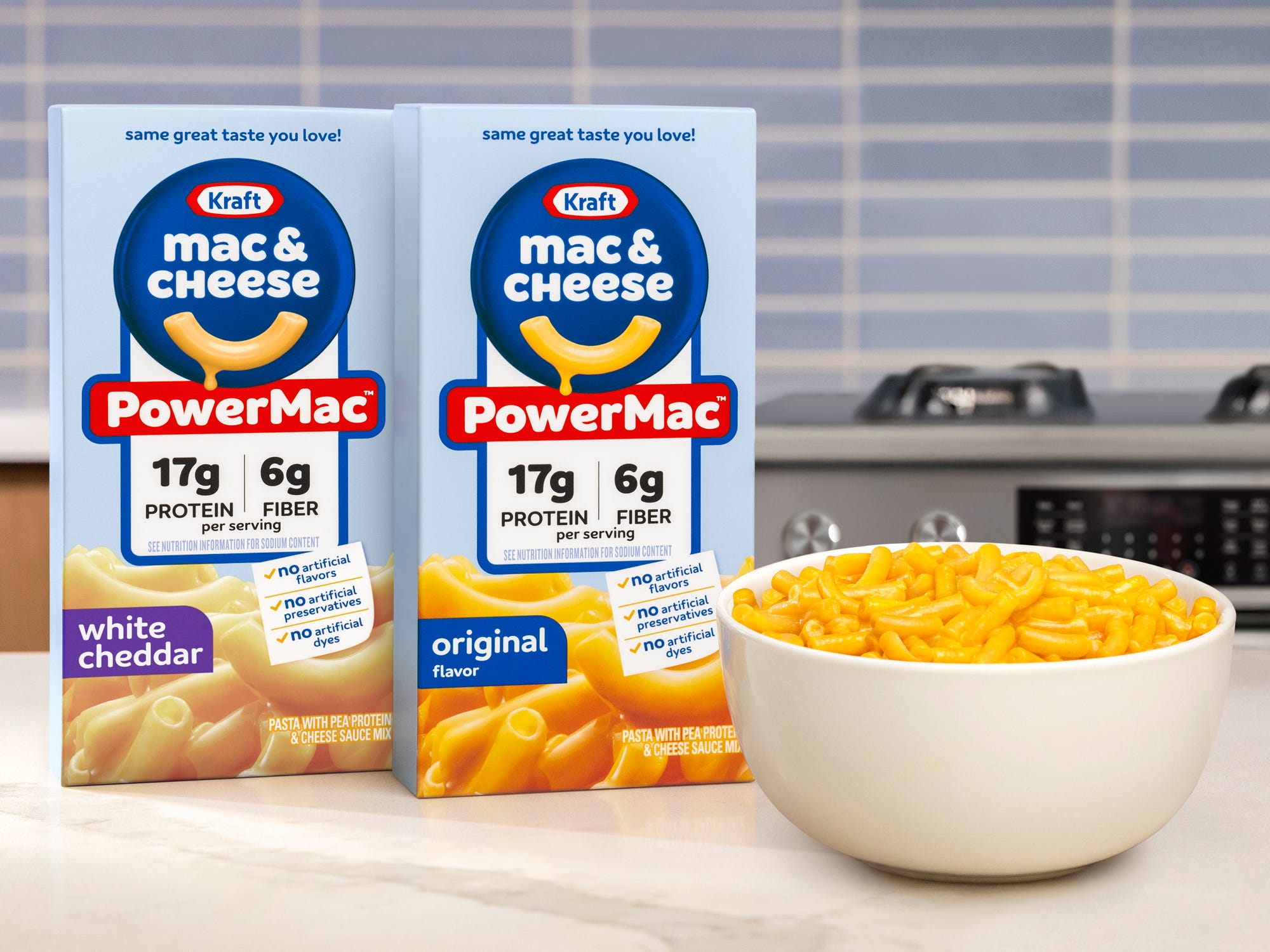
I’ve loved Kraft Mac & Cheese since I was a kid. Actually also got through college eating it when it was about 19 cents a box at the basement corner grocer in Powelton Village in Philadelphia. Most Americans have similar stories. Which is exactly why the brand holds the #1 spot in the category — and why their new PowerMac launch is worth paying attention to.
PowerMac delivers 17g of protein and 6g of fiber per serving, it comes in Original and White Cheddar, hits major retailers this April at $2.99 for a 7.25 oz box, and Kraft claims it doesn’t sacrifice the taste to get there. That last part matters most to me. Better-for-you mac and cheese has always had a repeat-purchase problem: shoppers try it once, miss the real cheese flavor, and go back to the original. If PowerMac actually tastes like Kraft Mac & Cheese, that’s a genuine breakthrough.
Now the uncomfortable part.
PowerMac’s marketing leans hard into the idea that Americans are desperately seeking more protein — and the brand isn’t wrong that consumers believe they need it. According to the IFIC’s 2025 Food & Health Survey, high-protein eating is the most common dietary pattern Americans say they’re following for the third straight year.
But contrary to all the marketing and health hype, most people in the U.S. already meet or exceed their protein needs. The average American adult has been consistently getting close to 16 percent of their calories from protein for decades. Nutrition researchers have started using a phrase I think fits perfectly: protein has “jumped the shark.” The concern is that people believe they’re doing something good for their health simply by boosting protein intake, even when they’re already consuming plenty. (There are real exceptions — older adults, people on GLP-1 medications losing muscle mass alongside fat, food-insecure households. For them, protein density genuinely matters).
Here’s what’s ironic: fiber — PowerMac’s other nutritional upgrade — is something Americans actually do fall short on, with most adults getting less than half the recommended daily intake. If Kraft had led with fiber, they’d have been more nutritionally honest. But I guess fiber doesn’t trend on TikTok. (FYI: One brand that’s doing fiber right is ‘That’s it’ with it’s new Fiber Fruit Bar).
My bottom line
PowerMac is a well-made product at a fair price that delivers more nutrition inside a meal families already love. Buy it. Feed it to your kids. Enjoy it yourself.
One note: let’s not let the marketing convince us that we are running on empty before the product showed up on our supermarket shelves.
Till next week!
Just a reminder that The Lempert Report now publishes every Tuesday